Thursday, July 30, 2015
Lost Between : Writings on Displacement an anthology
Lost Between was launched in the IWC recently to a full house. It is a beautiful collection of stories and poetry written by a group of Irish and Italian writers. I was a part of the first group of writers that went to Italy back in 2012. It was a fantastic experience. Some of the group recently had their stories translated into Italian. The second group of Irish writers headed over last year to successfully continue the project bringing it to a whole new level with Lost Between published by New Island. The introduction is written by Catherine Dunne and Federica Sgaggio who spear headed the project. As New Island writes "The individual works stand proudly by themselves to leave a lasting impression, and when read together they emerge to form a diverse, soulful and evocative collection that will charm and inspire."
You can listen to Catherine Dunne talk about the project recently on Arena.
Buy it here.
Wednesday, April 29, 2015
Maynooth University Summer Writing Institute
I took part in the inaugural Maynooth University Summer Writing Institute last year and it was a fantastic experience. If you teach creative writing it's well worth applying for. I really found the experience incredibly beneficial, I got a lot from it and subsequently the class that I teach did too! There was an array of teaching styles and approaches and it was very inclusive. Places are limited so get applying!
Maynooth University
Summer Writing Institute
At the institute you will look
closely at your own writing and student writing, explore issues and ideas in
the teaching of writing, work toward becoming teacher leaders and share
classroom practices or activities.
The
institute will take place daily from 10.00
a.m. to 3.30 p.m. from Monday 20th July until Friday 24th
July inclusive.
The institute will be free to all participants but places will be strictly limited and allocated across the education levels.
If you are interested in attending this event please contact us for an application form. The completed form should be submitted to us before Wednesday 20th May 2015. All applications must be made by email to writingcentre@nuim.ie. All shortlisted applicants will be contacted by Wednesday 27th May 2015.
All queries about the project should be directed to the writingcentre@nuim.ie
| National University of Ireland, Maynooth
Maynooth,
Co. Kildare, Ireland
The Writing Centre
Centre for Teaching and Learning
MĂșinteoireachta agus Foghlama
|
![]() |
In
July 2015 Maynooth University will host its second week-long writing institute on
campus. The institute was originally designed
in consultation with a range of teaching and learning networks, including Maynooth
University Early Childhood, the Further Education Support Service,
the Reading Association of Ireland and the Irish Network for the Enhancement of
Writing. The institute draws from the US
National Writing Project model and is designed to provide an opportunity for
teachers, from all education levels, to meet, share good practice, and learn
more about writing and the teaching of writing.
The institute will be free to all participants but places will be strictly limited and allocated across the education levels.
If you are interested in attending this event please contact us for an application form. The completed form should be submitted to us before Wednesday 20th May 2015. All applications must be made by email to writingcentre@nuim.ie. All shortlisted applicants will be contacted by Wednesday 27th May 2015.
All queries about the project should be directed to the writingcentre@nuim.ie
Wednesday, April 15, 2015
Wednesday, April 1, 2015
Thursday, February 26, 2015
In translation
My story 3009 has been translated into Italian for the Italian literary and arts journal Inkroci. The editors devoted an issue to Irish writers. Other writers in the issue are: Lia Mills, William Wall and Liz Nugent.
The story began life as a part of tHREE THOUSAND AND NINE. A project by artist Brain Duggan commissioned by Fingal Arts. You can buy the book here. The stories were written by myself, Brian Duggan, Pauline O'Hare and Daniel Boland.
You can read my story in English here. And the Italian translation here.
Illustration by Sam Franza.
Thursday, February 19, 2015
Monday, December 15, 2014
Monday, December 1, 2014
Fingal Arts Showcase Farmleigh House Friday 5th December 2.30-5pm
Fingal County Council Arts Showcase
The Mayor of Fingal, Cllr Mags Murray invites you to celebrate 20 years of the Arts in Fingal
YOU ARE INVITED TO CELEBRATE the work of Fingal County Council’s Arts Office. The event will showcase a variety of projects and activities including live performances, all of which have been supported, funded or initiated by the Arts Office over the last twenty years.
The event will take place at Farmleigh House on the 5th December 2014, from 2.30pm to 5pm.
Special Guest on the occasion will be Joan Burton TD, TĂĄnaiste and Minister for Social Protection.
As part of our celebrations we have commissioned a short animation which will highlight the importance of the arts to North Dublin and we will also showcase our Fingal Arts Development Plan 2013–2017.
RSVP susan.mooney@fingal.ie
VISUAL ARTS SHOWCASE Visual artists Una Sealy (ARHA),Aoibheann Greenan and Andrew Carson showcase a selection
of work.
Una Sealy native of Howth is an established and respected artist with three decades of experience
working as a professional painter. Una was one of twelve finalists chosen for the Hennessy Portrait Prize 2014. The short-listed artists’ works are currently on show at the National Gallery of Ireland until February 8th, 2015.
Aoibheann Greenan is currently one of four featured artists in the RHA’s annual Futures 14 series which runs until December 19th 2014. Next year will see Aoibheann create new work for her solo show in Temple Bar Galleries.
Andrew Carson was recently awarded THE FOUNDATION14 CRITICS CHOICE AWARD which includes a solo show in nag gallery, Dublin in 2015.
PUBLIC ART SHOWCASE
The Public Art Programme will showcase Per Cent for Art Scheme Projects.
The Lambay Singers will perform selected music from Mark Garry’s Sending Letters to the Sea album with professional singer / songwriter and project collaborator Nina Hynes.
Local writers Daniel Boland, Pauline O’Hare and Niamh MacAlister will read excerpts from Three Thousand and Nine, which was part of Brian Duggan’s O’Machine, O’Machine, film and book commission.
There will be a chance to re-visit Tattered Outlaws of History, a film / installation project by Dan Dubowitz and Fearghus O’Conchuir which drew together Fingal’s unique set of Martello Towers, artist Dan Dubowitz will be on hand to discuss the project.
Resort Residency, Case Study 1 is a showcase of the activity which took place at Lynders Mobile Home
Park, August – September 2014.
YOUTH & EDUCATION SHOWCASE
The Youth & Education showcase will feature film documentation of Space Invaders, Place Shapers and live presentations of Artful Dodgers and the Studio project.
Space Invaders is an arts festival for children, families and Early Childhood Educators initiated by Fingal Arts Office & Acting Up! Arts.
Place Shapers is an architecture and urban design project for young people in Fingal initiated by Fingal Arts Office and the Irish Architecture Foundation.
Artful Dodgers, an early year’s visual art and music programme delivered by Fingal Arts Office in partnership with Fingal County Childcare Committee and collaborating artists Jackie Maguire and Naomi Draper and two Fingal crĂšche services. The artists involved will be available to speak with those interested in hearing more about this programme and the research conducted in partnership with Trinity College Dublin.
Studio, inspired by the renowned Room 13 project, Fingal Arts Office are supporting the establishment of student-run art studios in primary schools in Fingal. The Artists and children involved will be available to speak with those interested in hearing more about the initial stages of this exciting initiative.
LOCAL ARTS SHOWCASE
There will be a series of live performances from local arts groups.
The Fingal Youth Orchestra will perform a festive arrangement. The Orchestra’s aim is to teach, foster a love of, and perform classical orchestral music for 8 – 19 year olds, using professional music teachers as conductors and tutors. The Orchestra is a not-for-profit organisation, run by a voluntary committee. Funding is from a combination of family subscriptions, voluntary donations, grants and awards including Fingal County Council’s Arts Office.
Hallelujah! by the Draiocht Community Clown Choir began in 2012 as part of Veronica Coburn’s Theatre Artist in Residence programme in Draiocht. A Clown Choir is a group of people who gather together to sing and laugh – to sing in celebration of what it is to be human and to laugh at the ridiculousness of the world we live in. The ethos of Hallelujah! Is accessibility, inclusiveness and artistic excellence.
The Percy French Troubadours will perform a series of songs from the repertoire of Percy French. Featuring all time favourites ‘Are ye right there Michael?’, ‘The Darling Girl from Clare’, ‘Poems to the West’
and ‘Abdul Abulbul Amir’, sung by an eclectic mix of 15 singers with a five piece band. The group was set up by Mr. Tony Proudfoot, a well known and experienced local amateur performer and theatre director.
ART CENTRES SHOWCASE
There will be representation from Fingal’s two Art Centres, Draiocht, and SĂ©amus Ennis Art Centre.
How to get to Farmleigh House
Driving
Go through the Phoenix Park. When entering the park at Parkgate street (main entrance near
Heuston Station) drive up along the main avenue.
Go straight through the first two roundabouts and take a left at the third roundabout (near
Castleknock end of park).
After taking a left at third roundabout, take the first right (50 yards from roundabout). Farmleigh
is at the end of this road. If entering the Phoenix Park through the Castleknock gate, take a right
at the first roundabout, and then take your first right again (after 50 yards). Farmleigh is at the end of this road.
@fingalarts
Monday, November 17, 2014
Friday, October 24, 2014
Rainbow Journeys launched!
Vision Impaired Writing Group take colourful journey through the past.
A new CD launched by a group of writers who are blind and vision impaired provides an opportunity to listen to unheard voices, as their personal reflections on real-life events take you through their “Rainbow Journeys” from past to present. Available to buy here.
The CD, entitled Rainbow Journeys, is a compilation of stories by a group of people with sight loss who got together through NCBI, the national sight loss organisation. Although they formed as a reading group, their interest soon moved on to writing and a class was facilitated by NCBI’s Niamh MacAlister, who stated:
“Most of the people NCBI works with acquire sight loss during their lives, and many as they get older, so reading and writing can suddenly become big challenges. NCBI works with people to find practical solutions to the challenges of sight loss but we also wanted to look at creative outlets. Creative writing was new for the 13 participants, all of whom have impaired vision. The goals of Rainbow Journeys were to write about our lives, the paths taken, the revelations, the lessons learned and bring to light the everyday wonder of our lives.”
The stories, which were then read by the writers and recorded, will take you on a ship from South Africa to Dublin, to the East Wall bomb of the 1950s, right through Europe on motorbike just after the Second World War and even getting caught skinny dipping by a priest! All are real-life events written and read by the participants.
May O’Brien, who is 82 and from Donnybrook, lost the sight in one eye in the 1990s and since 2006, has very little sight in her other eye. May believes that the group played an important supportive role for the participants.
“When we met as a reading group were just sharing views about the books, it was nothing personal. So when we began sharing our personal stories in the creative writing course it changed all of us. We built up confidence and trust and we supported each other. There was no façade where you pretend not to have a disability. And then you are accepting your disability, but also acknowledging that you still have a brain that needs a creative outlet.”
Rainbow Journeys was launched on Friday 17th October in Dun Laoghaire Town Hall as part of the Dun Laoghaire / Rathdown Social Inclusion Week.
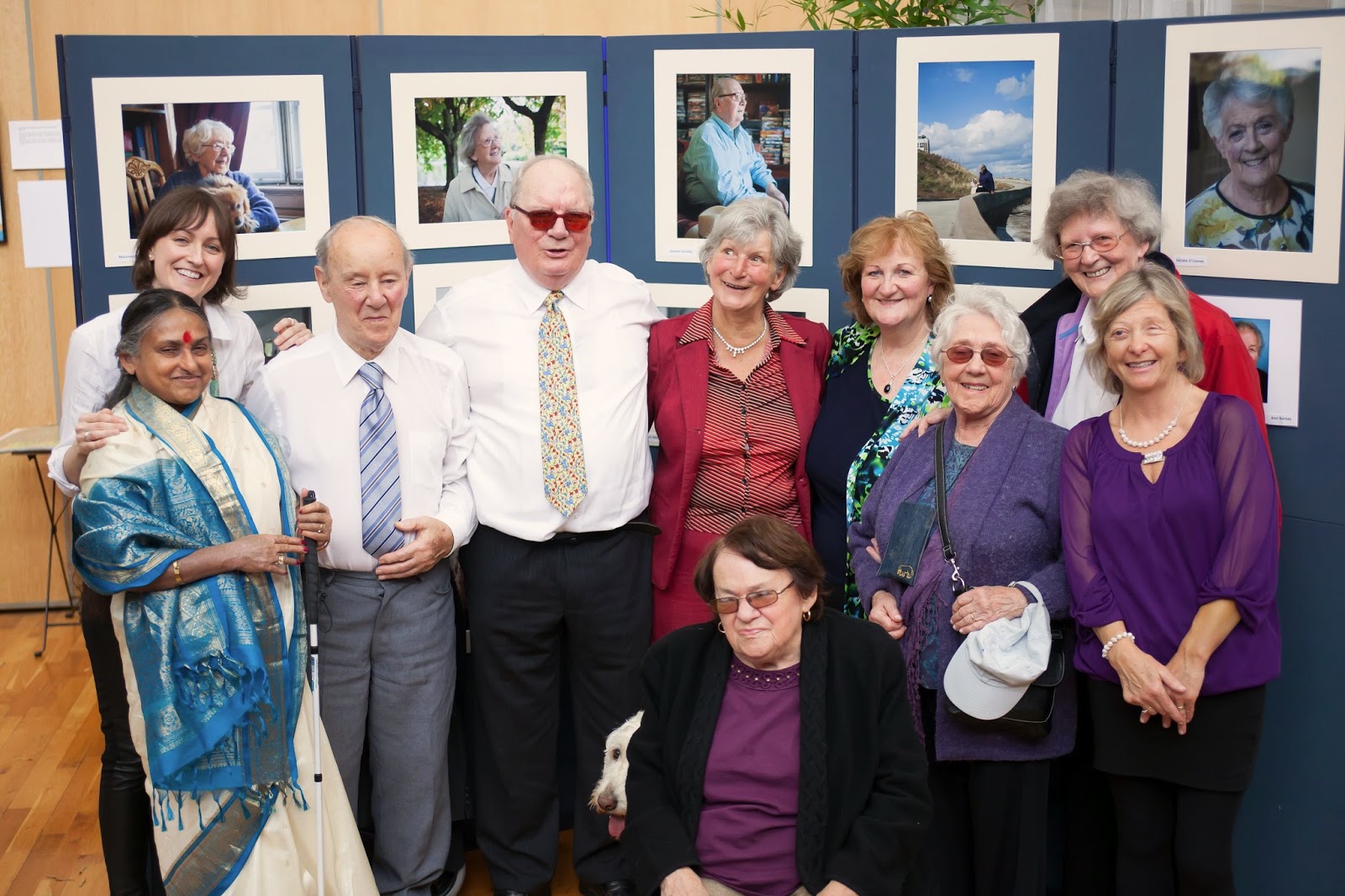
NCBI would like to thank photographer Anna Nowakowska for volunteering her time to take part in this project. Find out more about Anna Nowakowska Portrait Photography.
Launch Photos:
Thursday, October 16, 2014
Rainbow Journeys
Delighted to launch Rainbow Journeys at Dun Laoghaire Rathdown Social Inclusion Week at 11am Friday 17th of October in the Concourse of Dun Laoghaire town hall.
Rainbow Journeys, is about getting an
opportunity to hear unheard voices. It began life in May 2014 when a
group of eager and intrepid writers came together in the NCBI office in Dun
Laoghaire. The goals were – to write about our lives, the paths taken, the
revelations, the lessons learned and bring to light the everyday wonder of our
lives. There were thirteen brave service users in all. Unfortunately one of our
team passed away during our journey, Anne Barnes, and we proudly dedicate
the CD to her.
Produced and Edited by Niamh MacAlister,
Co-ordinated by
Aleksandra Okupinska,
Sound Engineer: Alan White,
Photographer: Anna Nowakowska
Thursday, September 4, 2014
Writing and Walking
Taken from the New Yorker
Why Walking Helps us Think by Ferris Jabr
In Vogue’s
1969 Christmas issue, Vladimir Nabokov offered some advice for teaching James Joyce’s “Ulysses”:
“Instead of perpetuating the pretentious nonsense of Homeric, chromatic, and
visceral chapter headings, instructors should prepare maps of Dublin with
Bloom’s and Stephen’s intertwining itineraries clearly traced.” He drew a charming one himself. Several decades later, a Boston
College English professor named Joseph Nugent and his colleagues put together
an annotated Google map that
shadows Stephen Dedalus and Leopold Bloom step by step. The Virginia Woolf
Society of Great Britain, as well as students at the Georgia Institute of
Technology, have similarly
reconstructed
the paths of the London amblers in “Mrs. Dalloway.”
Such maps
clarify how much these novels depend on a curious link between mind and feet.
Joyce and Woolf were writers who transformed the quicksilver of consciousness
into paper and ink. To accomplish this, they sent characters on walks about
town. As Mrs. Dalloway walks, she does not merely perceive the city around her.
Rather, she dips in and out of her past, remolding London into a highly
textured mental landscape, “making it up, building it round one, tumbling it,
creating it every moment afresh.”
Since at
least the time of peripatetic Greek philosophers, many other writers have
discovered a deep, intuitive connection between walking, thinking, and writing.
(In fact, Adam Gopnik wrote about
walking in The New Yorker just two weeks ago.) “How vain it
is to sit down to write when you have not stood up to live!” Henry David
Thoreau penned in his journal. “Methinks that the moment my legs begin
to move, my thoughts begin to flow.” Thomas DeQuincey has calculated that William Wordsworth—whose poetry is filled with
tramps up mountains, through forests, and along public roads—walked as many as
a hundred and eighty thousand miles in his lifetime, which comes to an average
of six and a half miles a day starting from age five.
What is
it about walking, in particular, that makes it so amenable to thinking and
writing? The answer begins with changes to our chemistry. When we go for a
walk, the heart pumps faster, circulating more blood and oxygen not just to the
muscles but to all the organs—including the brain. Many experiments have shown
that after or during exercise, even very mild exertion, people perform better
on tests of memory and attention. Walking on a regular basis also promotes new
connections between brain cells, staves off
the usual withering of brain tissue that comes with age, increases the volume
of the hippocampus (a brain region crucial for memory), and elevates levels of
molecules that both stimulate the growth of new neurons and transmit
messages between them.
The way
we move our bodies further changes the nature of our thoughts, and vice versa.
Psychologists who specialize in exercise music have quantified
what many of us already know: listening to songs with high tempos motivates us
to run faster, and the swifter we move, the quicker we prefer our music.
Likewise, when drivers hear loud, fast music, they unconsciously step a bit
harder on the gas pedal. Walking at our own pace creates an
unadulterated feedback loop between the rhythm of our bodies and our mental
state that we cannot experience as easily when we’re jogging at the gym,
steering a car, biking, or during any other kind of locomotion. When we stroll,
the pace of our feet naturally vacillates with our moods and the cadence of our
inner speech; at the same time, we can actively change the pace of our thoughts
by deliberately walking more briskly or by slowing down.
Because
we don’t have to devote much conscious effort to the act of walking, our
attention is free to wander—to overlay the world before us with a parade of
images from the mind’s theatre. This is precisely the kind of mental state that
studies have
linked to innovative ideas and strokes of insight. Earlier this
year, Marily Oppezzo and Daniel Schwartz of Stanford published what is likely
the first set of studies that directly measure the way walking
changes creativity in the moment. They got the idea for the studies while on a
walk. “My doctoral advisor had the habit of going for walks with his students
to brainstorm,” Oppezzo says of Schwartz. “One day we got kind of meta.”
In a
series of four experiments, Oppezzo and Schwartz asked a hundred and
seventy-six college students to complete different tests of creative thinking
while either sitting, walking on a treadmill, or sauntering through Stanford’s
campus. In one test, for example, volunteers had to come up with atypical uses
for everyday objects, such as a button or a tire. On average, the students
thought of between four and six more novel uses for the objects while they were
walking than when they were seated. Another experiment required volunteers to
contemplate a metaphor, such as “a budding cocoon,” and generate a unique but
equivalent metaphor, such as “an egg hatching.” Ninety-five per cent of
students who went for a walk were able to do so, compared to only fifty per
cent of those who never stood up. But walking actually worsened people’s
performance on a different type of test, in which students had to find the one
word that united a set of three, like “cheese” for “cottage, cream, and cake.”
Oppezzo speculates that, by setting the mind adrift on a frothing sea of
thought, walking is counterproductive to such laser-focussed thinking: “If
you’re looking for a single correct answer to a question, you probably don’t
want all of these different ideas bubbling up.”
Where we
walk matters as well. In a study led by Marc Berman of the University of South
Carolina, students who ambled through an arboretum improved their performance
on a memory test more than students who walked along city streets. A small but
growing collection of studies suggests that spending time in green
spaces—gardens, parks, forests—can rejuvenate the mental resources than man-made
environments deplete. Psychologists have learned that attention is a limited
resource that continually drains throughout the day. A crowded
intersection—rife with pedestrians, cars, and billboards—bats our attention
around. In contrast, walking past a pond in a park allows our mind to drift
casually from one sensory experience to another, from wrinkling water to
rustling reeds.
Still,
urban and pastoral walks likely offer unique advantages for the mind. A walk
through a city provides more immediate stimulation—a greater variety of
sensations for the mind to play with. But, if we are already at the brink of
overstimulation, we can turn to nature instead. Woolf relished the creative
energy of London’s streets, describing it in her diary as “being on the highest crest of
the biggest wave, right in the centre & swim of things.” But she also
depended on her walks through England’s South Downs to “have space to spread my mind out in.” And, in her youth, she
often travelled to Cornwall for the summer, where she loved to “spend my afternoons in solitary trampling” through the
countryside.
Perhaps
the most profound relationship between walking, thinking, and writing reveals
itself at the end of a stroll, back at the desk. There, it becomes apparent
that writing and walking are extremely similar feats, equal parts physical and
mental. When we choose a path through a city or forest, our brain must survey
the surrounding environment, construct a mental map of the world, settle on a
way forward, and translate that plan into a series of footsteps. Likewise,
writing forces the brain to review its own landscape, plot a course through
that mental terrain, and transcribe the resulting trail of thoughts by guiding
the hands. Walking organizes the world around us; writing organizes our
thoughts. Ultimately, maps like the one that Nabokov drew are recursive: they
are maps of maps.
Saturday, August 2, 2014
Thursday, July 24, 2014
London town
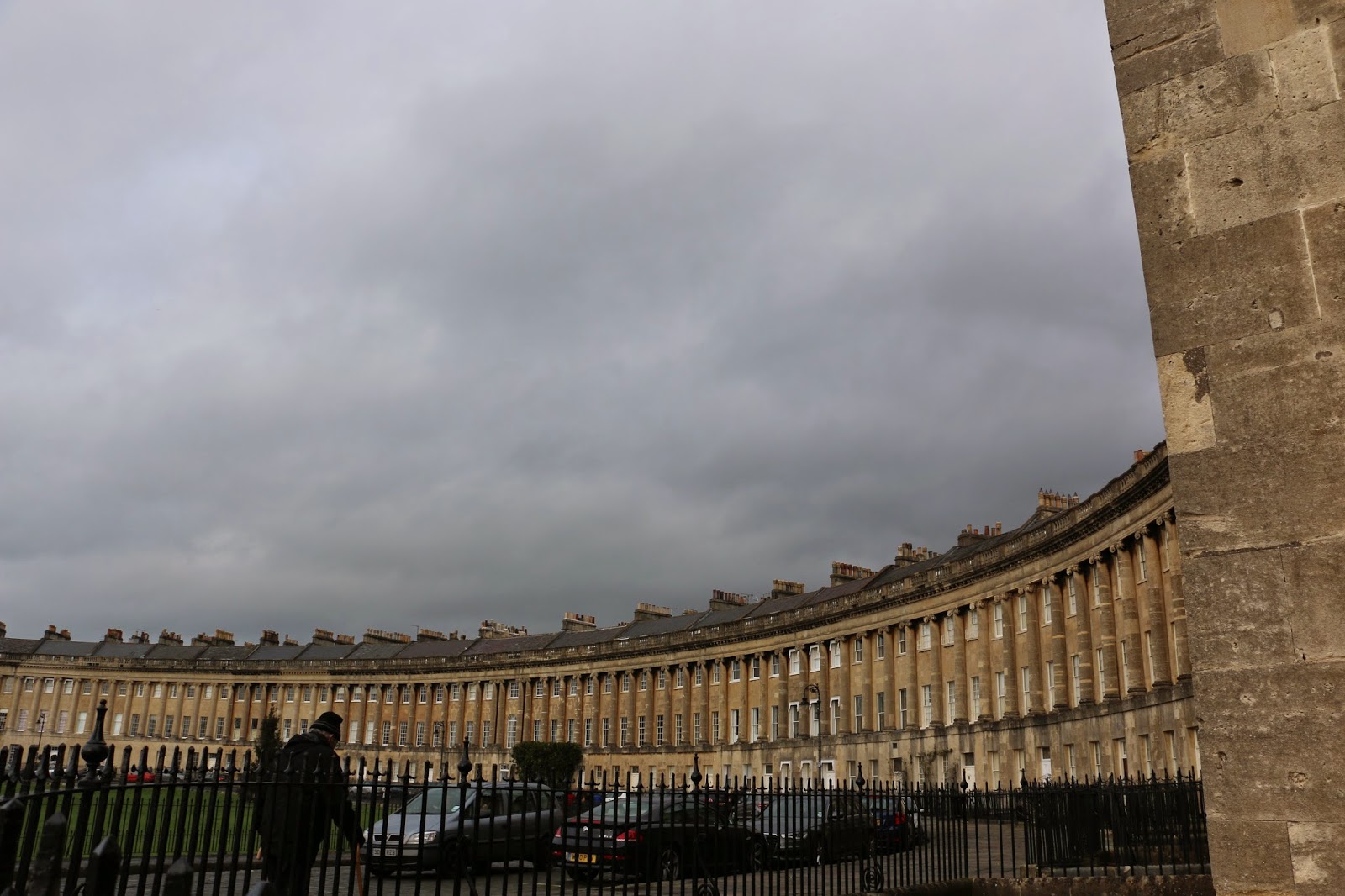
A visit to London town is always busy. Its a case of cram it all in as quickly as possible. I always breath a sigh of relief when I step off the plane back in Dublin. As nice as London is; its hard work. After arriving at a ridiculously early hour and dropping our bags at our digs it was breakfast at Borough Market. I chomped down on a sausage bap for my second breakfast of the day. Then it was onto the V&A. A quick look around the photography and the fashion room before I had the worst coffee I've ever tasted. Back out on the street we didn't really know what was going on. Police and army appeared from no where with helicopters looming over head. To be honest my first thought was 'has a bomb gone off somewhere?' Paranoid much? Later on we discovered it was a Pro-Palestinian protest about to make its way around the side of Hyde Park. We settled ourselves and headed for The Photography Gallery. With enough energy for one last stop we made our way to the John Soane Museum. He was an architect and collector. He left his house and estate to the State instead of his children. I'm sure that went down well. So fitting that A Rake's Progress by William Hogarth is part of his collection. Defeated we returned for naps before dinner. And oh what a dinner it was! My sister works at The Garrison. To say that we were looked after would be understating it. The service was fantastic, the food impeccable.
The photo of the Shard above is the view from my happy dinner perch. With just enough room (I decided not to dessert for this reason) we headed to The Hide for cocktails.
With the cocktail residues still merrily making their way around my system I woke up nice and early. I had a people watching coffee and croissant back at Borough Market as I waited for the troops to convene and then it was around the corner to The Tate Modern. The Malevich exhibition was my destination. Would have checked out the Matisse too except for we ran out of time and had to high tail it across town for Sunday lunch at Brawn. And what a f#*%ing lunch it was too. I have two words only: go there. I rounded out the day with dinner in Pizarro watching the last of the rain and stragglers making their way down Bermondsey Street on a lazy Sunday evening.
One last cultural hurrah at Sotheby's for the Unauthorized Banksy Retrospective. I couldn't quite figure out who was taking the piss out of whom?! But the snobby girl at the door made it all worthwhile.
Thursday and the recovery continues ...
Thursday, July 17, 2014
Fish Short Memoir Competition 2014 Long List
I was bored on Sunday night and started poking around the internet looking at competitions to enter and competitions I didn't make the cut for. At least I thought I didn't make the cut for. I entered the Fish Short Memoir Contest earlier in the year and promptly forgot about. I subsequently deleted the email announcing the winners of the competition. My only thought on that is I must have been having a bad day! So I was really surprised to see my own name on the long list as I scrolled down through the list of writers and their stories. I'm particularly delighted to make it to the list as its the first time I've had a non-fiction piece recognised. There's no greater impetus to keep on going!
Thursday, July 10, 2014
Liberty Silk by Kate Beaufoy
Another Tuesday, another book launch in the Gutter Bookshop. Liberty Silk by Kate Beaufoy was delightfully introduced by Ciaran Hinds. Yes, that Ciaran Hinds!
Kate Beaufoy is the new pen name for Kate Thomspon. If you recognise the name its probably because you have either seen Glenroe or read one or two of the eleven books she has written.
Kate was also the first VIP guest author for the NCBI and Childvision's annual Readathon in 2008. She kindly returned to help us celebrate its five year anniversary last year.
The idea for the book was born from letters her grandmother wrote after the first world war - all of which feature in the book. The story's breadth stretches from Paris 1919 to Hollywood 1945 to 1965. It is "an evocative story of survival, betrayal and the invincibility of love." Available in all good bookshops now.
Thursday, June 26, 2014
Fallen by Lia Mills
A fortnight ago I went to the launch of Fallen by Lia Mills in the Gutter Bookshop. It was a warm muggy evening and the shop was busting at the seams with Lia fans. Not only did the book sell out but I didn't even get near the wine table! Luckily for me a very generous gentleman gave me a copy so I didn't go home empty handed.
I started it last night greedily devouring the first half in one sitting. The writing is stunning and the story engaging and unique. Anne Enright, during her introduction, observed that this is probably the start of many stories around the backdrop of the 1916 rising but that Lia has the edge on being one of the first, and of course being the best. Having received rave reviews in the run up to the launch expect to hear people talking about this book for a while to come. Get reading!
Check out her blog Libran Writer.
Subscribe to:
Posts (Atom)


.jpg)